
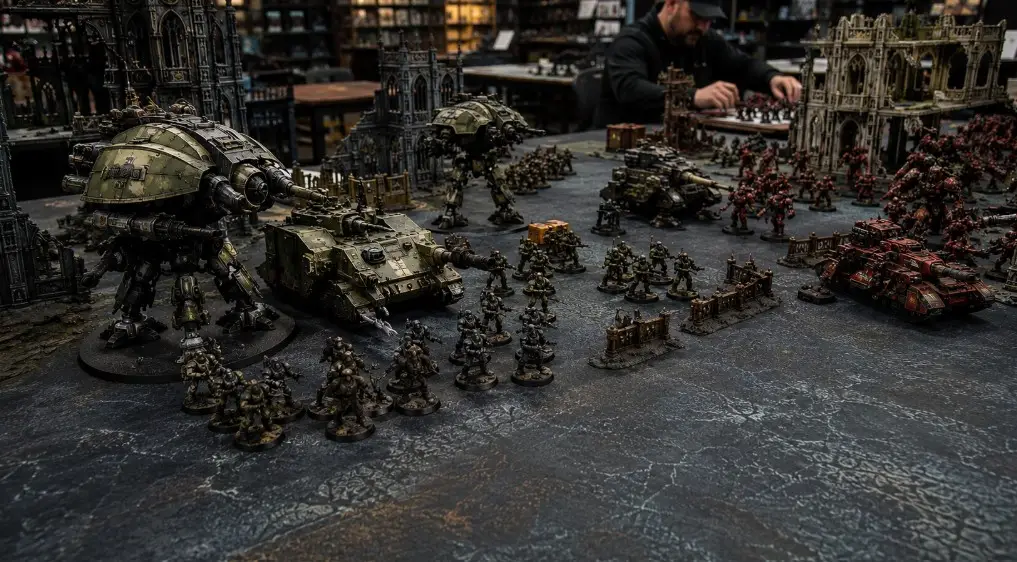
Warhammer 40000 detachment balance changes in the July 2026 update make Purge the Foe harder to access cheaply, revise Force Dispositions, add a sixth objective to every Purge mission map and improve selected Disruption layouts.
The release also changes unit points and important interactions involving revived characters, Command Point generation, transports, reactive movement, debuffs, FRAME and first-turn Deep Strike.
The practical answer is that players should rebuild and validate existing lists before their next game. A list may remain legal but perform differently because its Detachment Point cost, disposition, scoring plan or unit total has changed.
This is the first monthly intervention during the edition’s opening three months, not the first regular quarterly balance datasheet, which is expected in autumn 2026.
Key Highlights:
| Area | Main July 2026 Change |
| Detachments | Selected DP costs and Force Dispositions changed |
| Purge the Foe | Every mission map now has six objectives |
| Disruption | Several layouts received targeted improvements |
| Unit points | Mobile gun platforms rose while many transports fell |
| Core rules | Revival, movement, CP and debuff interactions were clarified |
Together, these changes affect army construction, battlefield positioning and tournament preparation.
What Are the Main Warhammer 40000 Detachment Balance Changes?
The July update connects detachment selection, mission scoring, unit efficiency and universal rules rather than applying isolated faction nerfs.
The Principal Changes:
- Several Purge the Foe detachments now cost more Detachment Points.
- Selected detachments have moved to different Force Dispositions.
- All Purge the Foe maps now contain six objectives instead of five.
- Several Disruption layouts have been adjusted.
- High-output mobile shooting units received targeted increases.
- Many dedicated transports received modest reductions.
- Revived characters now return as separate one-model units.
- Additional CP generation is limited to one per battle round.
Players must therefore assess the complete army rather than judging a detachment, unit or mission change in isolation.
Why Did Games Workshop Release the July 2026 Balance Update?
The rules team said event win rates between Force Dispositions were “remarkably balanced”, but Purge the Foe had become the most frequently selected and was widely viewed as the most efficient option. Its stated aim was to ensure that “ALL the dispositions are viable choices”.
The intervention arrived one month into the edition. It addresses early rules questions, inherited interactions and competitive patterns without waiting for the autumn quarterly update.
The distinction matters. Balanced overall win rates do not prove that every detachment, match-up or mission layout is equally healthy. Purge could remain over-selected while Disruption struggled in particular pairings, even when aggregate disposition results appeared close.
A supplied competitive review also described Adepta Sororitas as having one event win and two TiWP results before the patch, illustrating why faction-level experience can differ considerably from game-wide data.
How Have Detachment Points and Force Dispositions Changed?

Detachment Points determine how much of an army’s construction allowance is invested in a rules package. Increasing a powerful detachment from 1DP to 2DP, or from 2DP to 3DP, reduces the number of complementary detachments that can be combined with it.
Players can confirm current costs, leader combinations and assignments through the current points and dispositions document. It was updated on 22 July 2026 and remains the controlling list-building reference.
Detachment Point Increases
Notable changes in the supplied coverage include Bringers of Flame moving to 2DP, Combined Arms becoming a 2DP option and Hexwarp Thrallband rising to 3DP. Imperial Agents received the opposite treatment: four detachments became 2DP, while Veiled Blade Elimination Force fell to 1DP.
These adjustments change opportunity cost. A stronger detachment may remain effective, but choosing it can now prevent another rules package from fitting into the same army.
Which Detachments Changed Force Disposition?
Purge access was removed from several inexpensive or flexible options. Examples include Lords of the Warp moving to Take and Hold, Might of the Moritoi moving to Take and Hold, Argent Assault moving to Priority Assets and Murdertalon Raiders moving to Reconnaissance.
Other detachments gained new strategic identities. Penitent Host moved to Purge the Foe, Imperialis Fleet moved to Reconnaissance, Carnival of Excess moved to Disruption and Haloscreed Battle Clade moved to Priority Assets.
Competitive List-Building Consequences
A disposition change can alter an army’s intended scoring pattern even when none of its units change. Players may need different objective units, deployment plans, reserves and secondary detachment choices.
The update therefore rewards armies built around a coherent disposition rather than lists that purchase efficient Purge access as a low-cost addition.
Why Was Purge the Foe Changed to Six Objectives?
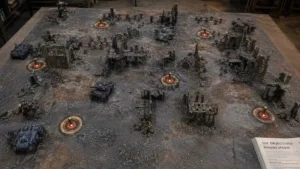
Every Purge the Foe mission map now uses six objectives instead of five. The former central objective is effectively divided, making it more difficult for a Titanic Knight, Defiler or another large shooting platform to occupy one position with broad visibility and easy access to several targets.
Six objectives also give the opposing player more locations on which to capture, act or force trades. Purge armies may have to spread their resources rather than concentrating durability and firepower around a single dominant lane.
The change should not automatically be described as a complete Purge nerf. Its impact will depend on terrain, faction mobility, objective placement and whether a list can continue applying damage while contesting several areas.
How Will the Disruption Mission Changes Affect Competitive Armies?
Several Disruption layouts were amended to make difficult match-ups more manageable. The rules team said Disruption was only marginally behind the other dispositions and that some players were already achieving strong results, so it avoided a radical redesign.
The practical effect should be better access to objectives, movement routes and scoring positions in layouts that previously placed excessive pressure on the Disruption player. Armies specialising in board control, close-range pressure or denial may find it easier to establish their plan.
Players should practise the updated diagrams instead of relying on routes learned from the original mission set. Even small changes to objective placement can affect deployment, reserves and first-turn movement.
Which Unit Points Changes Could Reshape Army Lists?
The official July update summary identifies mobile, high-output gun platforms as an early concern and confirms reductions for numerous dedicated transports.
The following condensed table captures the numerical changes contained in the supplied Imperium and Chaos competitor extracts. These values should still be checked against the latest faction documents before list submission.
Faction Points And Rules Snapshot:
| Faction | Supplied Numerical Changes |
| Adepta Sororitas | Sacresant tax 15 to 10, applying from unit three; Dominions, Hospitaller and Immolator −10; Imagifier to 55; Intranzia −15 to 135; Junith −10 to 105; Morvenn +15 to 200; Repentia to 70/140; Seraphim to 75/150; Novitiates to 90; Rhino to 65; Zephyrim to 75/150. Three enhancements fell to 15, 20 and 15; Light of the Emperor rose to 2CP. |
| Adeptus Custodes | Aleya, Wardens and Arkana Psykana Rhino −10; Venatarii −10/−20 for three/six models, with +5 per lance; Adominortis +10. The Ares ability now targets within 24 inches. |
| Adeptus Mechanicus | Hastarii −10 to 105; Duneriders −10 for units one to three; Vanguard −5; maximum Kataphron, Raider and Sulphurhound units −10; three Ironstriders +10. |
| Imperial Agents | Main detachments moved to 2DP and Veiled Blade to 1DP. Enhancements fell to 15, 10, 15 and 20; Eversor to 100, Grey Knight Terminators to 175, Rhino to 65, Chimera to 60 and Immolator to 90, with several fourth-unit taxes of 10. |
| Astra Militarum | Super-heavies −35 for the first and −20 thereafter; common transports −10 for the first three; Leman Russ Commander −20; Demolisher −10; Kasrkin −10/−5 by unit threshold; third Tempestus Command Squad +10. |
| Grey Knights | Voldus −15 to 125; Razorback to 75 and Rhino to 70; ten Terminators −15 to 360; Strike Squads to 115/130. Several measurements changed from 9 to 8 inches. |
| Imperial Knights | Knight Castellan +25; Gate Warden Lance now marks two objectives as foundations. |
| Chaos Daemons | Beast of Nurgle +5; six Bloodcrushers +10, with third-unit increases of +10/+20; Fluxmaster −10; Kairos +10; Lords of Change +20/+25; Shalaxi −25; enhancement changes of +5, −5 and +5. |
| Chaos Knights | Huntsmen and Stalkers −5; Ruinator attacks changed from 2D6 to 6+D6. |
| Chaos Space Marines | Abaddon, Predators, Chosen, Huron, Masters and Venomcrawler increased; Jump Lord, Rhinos, Terminators, Mutilators, Nemesis Claw and Reave-Captain fell. A second Defiler rose +10 to 340, while Vashtorr increased 15. |
| Death Guard | Rhino −10; six Deathshroud −15; Mortarion −10; ten Plague Marines −10; Defilers +10/+20. Deathshroud lost the six-inch Rapid Ingress interaction, while Mortarion changed to an eight-inch range with a −1 modifier. |
| Emperor’s Children | Rhino −10; Defilers +10/+20; Fulgrim and Lucius −10; Maulerfiend −10; Sorcerer −5; Shalaxi −25. Dark Apparitions changed from nine to eight inches. |
| Thousand Sons | Hexwarp rose to 3DP; Predators +10; Rhino −10; Defilers +10/+20; Forgefiend +5 per ectoplasma cannon; ten Scarab Occult +15; Sekhetar Robots increased by unit size and repetition; Kairos +10 and Lords of Change +20/+25. |
| World Eaters | Angron −20; Rhino −10; Terminators −10/−20; Eightbound and Exalted Eightbound −10/−15; Berzerkers −10/−15; Invocatus and Juggernaut Lord −10; Maulerfiend −5; Bloodcrushers +10. The supplied Chaos Predator entry was truncated, so no value is reproduced. |
The figures show a broad pattern: transports and selected infantry became cheaper, while efficient ranged platforms and high-performing combinations absorbed increases.
Mobile Gun Platforms Face Higher Costs
Defilers, Predators, Lords of Change, Sekhetar Robots and the Knight Castellan illustrate the pressure on durable ranged output. Some units also lost rerolls or favourable interactions, meaning the effective reduction can exceed the visible points increase.
This may discourage repeated copies, but it does not necessarily remove the units from competitive lists.
Cheaper Transports And Infantry Mobility
Rhinos, Chimeras, Duneriders, Razorbacks and other transports generally became cheaper. Those savings can fund another infantry unit, enhancement or support character.
However, dedicated transports must now begin with a unit embarked, so the discount comes alongside a stricter deployment requirement.
What Universal Rules Changes Must Players Recheck?
The update changes several interactions capable of affecting every faction, including armies whose points remained stable.
Core Rules:
- Revived characters return as separate one-model units.
- Players can generate only one additional CP per battle round.
- Dedicated transports must begin with a unit embarked.
- A unit can make only one normal move per phase.
- Several stacked Ballistic Skill and hit penalties were removed.
- FRAME was added to some vehicles and removed from smaller units.
- First-turn Deep Strike permissions were stated more explicitly.
- Some intentional modifier exceptions, including Fulgrim, remain.
The revival amendment directly limits combinations in which a destroyed character repeatedly returned inside a restored bodyguard unit. Movement and debuff clarifications similarly remove unintended stacking rather than rewriting each army’s intended identity.
What Should UK Players Do Before Their Next Tournament?
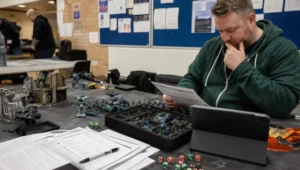
UK players should assume that any army created before 22 July needs another validation pass, particularly when it uses Purge, multiple detachments, revived characters or dedicated transports.
Pre-Event Actions:
- Download the newest faction pack and Munitorum Field Manual.
- Recalculate every unit, enhancement and repetition tax.
- Confirm each detachment’s DP cost and disposition.
- Review changed keywords, deployment rules and stratagem wording.
- Practise the six-objective Purge layouts.
- Check the organiser’s publication cut-off and list deadline.
Completing these steps reduces the risk of arriving with an outdated or strategically mismatched list.
Rebuild And Validate Every Army List
Players should rebuild from the current documents rather than simply subtracting or adding points to an old roster. Disposition changes can affect the legality or purpose of the full combination even when the total points remain within the event limit.
Which Missions Should Players Practise?
Priority should go to all revised Purge and Disruption layouts. Practice games should also test transport deployment, objective spreading, reactive movement and match-ups involving large mobile shooting units.
Tournament Rules And Implementation Dates
The Newport event schedule details list the UK event for 14–16 August 2026 at the International Convention Centre Wales. Players must still confirm the event pack and rules cut-off instead of assuming every update automatically applies.
Conclusion
The Warhammer 40000 detachment balance changes are a targeted correction rather than a full system reset. Their significance comes from the combined effect of Detachment Point increases, disposition reassignments, six-objective Purge maps, revised Disruption layouts and faction-level points changes.
Purge remains available, but many armies must invest more deliberately in it. Disruption receives measured assistance, while cheaper transports may support more mobile infantry and objective-focused builds.
The rules team expects another update in around one month before the first regular quarterly balance datasheet arrives in autumn 2026. Competitive results from the revised missions will determine whether these early changes are sufficient or require another intervention.
FAQs
Do The July Changes Appear In The Official App?
The update was scheduled to reach the app shortly after publication. Players should compare the app against the newest downloadable documents if any value appears inconsistent.
Is This The First Quarterly Balance Datasheet?
No, it is the first monthly rules intervention during the edition’s initial three-month monitoring period. The first regular quarterly balance datasheet is expected in autumn 2026.
Must Players Replace Their Printed Rules?
Printed materials can still provide core faction information, but amended points and rules take precedence. Players should keep the latest digital documents available during list creation and events.
Can An Existing List Remain Legal?
Yes, although it may require different Detachment Points or a revised disposition combination. Legal lists can also become strategically weaker when missions or unit values change.
Are All Purge Armies Now Weaker?
No, the update targets particular detachments, units and mission advantages. The effect will vary by faction, terrain and army construction.
Could Cheaper Transports Improve Mechanised Armies?
Lower costs create space for more infantry or support units. Their value still depends on embarked units, mission plans and the requirement to begin with passengers.
When Will The Next Rules Update Arrive?
The rules team said another intervention should arrive in approximately one month. The usual quarterly cadence is expected to begin after the autumn balance update.