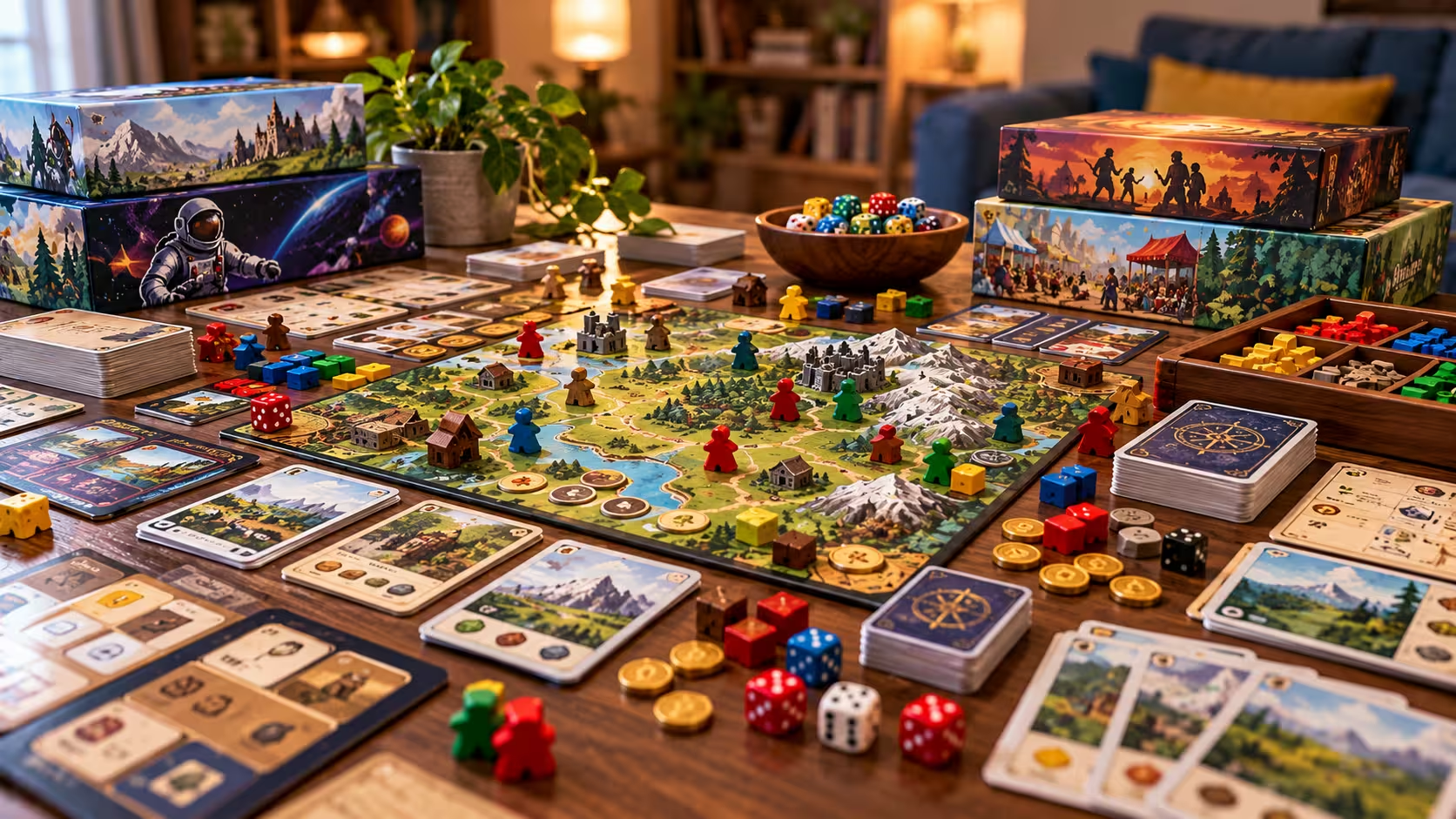
The best board games bring people together through competition, teamwork, clever decisions and unexpected moments. Whether you enjoy strategic challenges, entertaining party games or relaxing family activities, there are plenty of excellent tabletop games worth exploring in 2026.
Modern board games offer far more variety than traditional favourites such as Monopoly, Chess and Scrabble. Players can build railway networks, manage wildlife habitats, solve mysteries, develop civilizations or cooperate to prevent global disasters.
However, choosing the right board game involves more than looking at popularity. Player count, playing time, complexity, age suitability and replayability all influence whether a game will become a household favourite.
We have selected 15 of the best board games based on their gameplay mechanics, accessibility, strategic depth, replayability and suitability for different groups. The selection combines award-winning modern games, established classics and newer tabletop favourites.
What Are the Top 15 Best Board Games to Play?
1. Ticket to Ride: Europe – Best Overall Family Board Game
Ticket to Ride: Europe is an excellent introduction to modern strategy board games. Players compete to establish railway routes connecting cities across Europe while completing secret destination tickets.
The objective is straightforward: collect coloured train cards, claim railway connections and complete routes to earn points. However, deciding which connections to secure first creates surprisingly interesting strategic challenges.
The European edition introduces tunnels, ferries and train stations, offering additional flexibility compared with the original Ticket to Ride.
Its greatest advantage is accessibility. Children and inexperienced players can understand the basic mechanics relatively quickly, while experienced players can develop sophisticated route-planning strategies.
Ticket to Ride: Europe – Game Details
| Feature | Details |
| Game type | Railway strategy and route building |
| Players | 2–5 |
| Recommended age | 8+ |
| Playing time | 30–60 minutes |
| Difficulty | Easy to medium |
| Publisher | Days of Wonder |
| Original release | 2005 |
| Main objective | Complete railway routes and earn the most points |
| Gameplay mechanics | Card collection, route building, network planning |
| Best for | Families, beginners and mixed-experience groups |
| Replayability | High, with changing destination tickets and competing routes |
| Main limitation | Opponents can block important connections |
Why choose this game?
Ticket to Ride balances accessibility with meaningful decision-making. Every turn involves choosing between collecting more cards, claiming a valuable route or taking additional destination tickets.
It is particularly suitable for households looking for a game that younger players and adults can enjoy together without needing extensive preparation.
2. Catan – Best Board Game for Trading and Negotiation
Catan is one of the most influential modern board games, combining settlement development, resource management and negotiation.
Players compete to establish settlements and cities across an island divided into hexagonal terrain tiles. Different regions produce resources such as wood, brick, wheat, sheep and ore.
Resources are distributed according to dice rolls, meaning players must balance strategic planning with unpredictable opportunities.
Trading is central to the experience. Negotiating with opponents can help secure missing materials, although an apparently beneficial exchange may also strengthen a competitor.
Catan – Game Details
| Feature | Details |
| Game type | Economic strategy and settlement building |
| Players | 3–4 in the base game |
| Recommended age | 10+ |
| Playing time | 60–90 minutes |
| Difficulty | Medium |
| Publisher | Catan Studio / Kosmos |
| Original release | 1995 |
| Main objective | Be the first to reach the required victory points |
| Gameplay mechanics | Dice rolling, trading, resource collection and building |
| Best for | Families, friends and negotiation enthusiasts |
| Replayability | High due to variable island layouts |
| Main limitation | Dice luck and resource shortages can affect progress |
What makes Catan special?
Unlike games where players concentrate entirely on their own boards, Catan encourages constant interaction.
A strategically placed settlement can provide consistent resources, while a successful trade can immediately change the balance of power.
The standard game is designed for three or four players. Anyone wanting five or six participants should look for the compatible player extension rather than assuming those pieces are included.
Catan is a particularly strong choice for groups that enjoy discussion, competition and tactical decision-making.
3. Cascadia – Best Relaxing Strategy Board Game
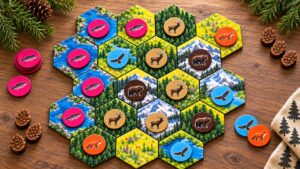
Cascadia offers a quieter approach to strategy, challenging players to construct balanced wildlife habitats inspired by the Pacific Northwest.
Players select landscape tiles and animal tokens, gradually expanding their ecosystems. Points are awarded for meeting wildlife arrangement objectives and creating connected habitat corridors.
Although the rules are approachable, achieving high scores requires thoughtful planning. Each animal species has specific positioning requirements, making every placement important.
Cascadia – Game Details
| Feature | Details |
| Game type | Nature-themed puzzle and tile placement |
| Players | 1–4 |
| Recommended age | 10+ |
| Playing time | 30–45 minutes |
| Difficulty | Easy to medium |
| Publisher | Flatout Games / Alderac Entertainment Group |
| Original release | 2021 |
| Main objective | Create the highest-scoring ecosystem |
| Gameplay mechanics | Tile drafting, pattern building and habitat connection |
| Best for | Solo players, couples and casual strategy fans |
| Replayability | High, with variable wildlife scoring cards |
| Main limitation | Limited direct competition between players |
Why is Cascadia worth playing?
The game creates an interesting balance between short-term decisions and long-term planning. A useful animal placement might improve one scoring objective while reducing opportunities elsewhere.
Cascadia is also visually satisfying because players can see their habitats develop throughout the game.
It is especially appropriate for people who prefer thoughtful puzzles rather than aggressive competition.
4. Azul – Best Board Game for Beginners Who Enjoy Puzzles
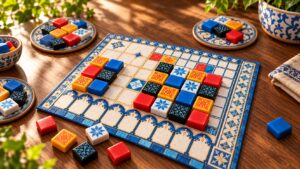
Azul is a visually appealing tile-placement game inspired by traditional Portuguese decorative tiles.
Players collect coloured tiles from shared factory displays and arrange them on individual player boards. Completed patterns generate points, while poor planning can result in penalties.
The rules are simple enough for newcomers to learn quickly, but successful play requires concentration, spatial awareness and an understanding of opponents’ decisions.
Azul – Game Details
| Feature | Details |
| Game type | Abstract strategy and tile placement |
| Players | 2–4 |
| Recommended age | 8+ |
| Playing time | 30–45 minutes |
| Difficulty | Easy to medium |
| Publisher | Next Move Games |
| Original release | 2017 |
| Main objective | Score points by completing decorative tile patterns |
| Gameplay mechanics | Tile drafting, pattern building and tactical blocking |
| Best for | Beginners, families and puzzle enthusiasts |
| Replayability | High through changing tile availability |
| Main limitation | Mistakes can create substantial scoring penalties |
What makes Azul enjoyable?
Azul rewards players who recognise patterns and anticipate the consequences of their choices.
Selecting a particular tile colour may help complete your own board, but it could also leave another player with an advantage.
This combination of accessible rules and tactical interaction makes Azul suitable for both casual family gaming and competitive sessions.
Its relatively short playing time also makes it a convenient option for weekday evenings.
5. Pandemic – Best Cooperative Board Game
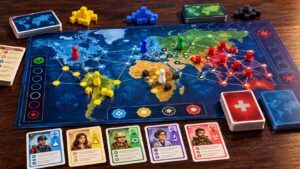
Pandemic is a cooperative strategy game in which players work together to control the spread of four diseases threatening cities around the world.
Instead of competing against one another, participants form a disease-control team. Each player takes on a specialist role with unique abilities.
Players must travel between cities, treat infections, construct research stations and collect the cards needed to discover cures.
Victory requires teamwork, careful planning and efficient use of limited actions.
Pandemic – Game Details
| Feature | Details |
| Game type | Cooperative strategy |
| Players | 2–4 |
| Recommended age | 8+ |
| Playing time | Approximately 45 minutes |
| Difficulty | Medium |
| Publisher | Z-Man Games |
| Original release | 2008 |
| Main objective | Discover cures for all four diseases before losing |
| Gameplay mechanics | Cooperative planning, action management and card collection |
| Best for | Families, couples and teamwork enthusiasts |
| Replayability | High through variable roles, outbreaks and difficulty settings |
| Main limitation | Experienced players may dominate group decisions |
Why should you try Pandemic?
Pandemic creates tension because players must continually respond to unpredictable outbreaks.
A strategy that initially appears successful can collapse if infections spread rapidly across connected cities.
The cooperative structure makes the game particularly suitable for groups that prefer shared victories rather than individual winners.
However, players should avoid allowing one confident participant to control every decision. The experience is more rewarding when everyone contributes.
6. Wingspan – Best Board Game for Engine-Building Strategy
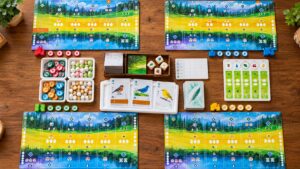
Wingspan combines wildlife education with an engaging engine-building strategy system.
Players develop bird sanctuaries by attracting different species to forest, grassland and wetland habitats.
Each bird card provides specific abilities, and carefully combining these effects allows players to create increasingly productive systems.
Some birds improve food collection, others generate eggs, and certain species provide additional cards or scoring opportunities.
Wingspan – Game Details
| Feature | Details |
| Game type | Engine-building strategy |
| Players | 1–5 |
| Recommended age | 10+ |
| Playing time | 40–70 minutes |
| Difficulty | Medium |
| Publisher | Stonemaier Games |
| Original release | 2019 |
| Main objective | Develop the highest-scoring wildlife preserve |
| Gameplay mechanics | Card drafting, resource management and engine building |
| Best for | Nature enthusiasts, solo gamers and strategy players |
| Replayability | Very high due to extensive bird-card combinations |
| Main limitation | Initial rules and card interactions can feel complicated |
What makes Wingspan different?
The most satisfying part of Wingspan is watching an efficient combination of bird abilities develop.
An early investment in food production may support stronger birds later, while egg-laying abilities can become important near the end of the game.
The game also includes a solo option, making it suitable for players who do not always have a group available.
Wingspan is particularly appealing to people who enjoy resource-management video games and want a similarly rewarding tabletop experience.
7. Codenames – Best Party Board Game for Groups

Codenames is a fast-moving word-association game built around teamwork, deduction and communication.
Players form two teams, each led by a spymaster who knows the identities of secret agents represented by words on the table.
The spymaster gives one-word clues to help teammates identify the correct agents while avoiding opposing agents and a dangerous assassin.
A successful clue can connect several seemingly unrelated words, making creative thinking essential.
Codenames – Game Details
| Feature | Details |
| Game type | Party and word-association game |
| Players | 4–8+ in the standard competitive edition |
| Recommended age | 10+ |
| Playing time | Approximately 15 minutes |
| Difficulty | Easy |
| Publisher | Czech Games Edition |
| Original release | 2015; refreshed edition released in 2025 |
| Main objective | Identify all your team’s secret agents before the opposing team |
| Gameplay mechanics | Word association, deduction and teamwork |
| Best for | Parties, families and larger social gatherings |
| Replayability | Very high through different word combinations |
| Main limitation | Players with limited shared vocabulary may struggle with clues |
Why is Codenames ideal for parties?
Unlike complicated strategy games, Codenames creates excitement through conversation and interpretation.
A single clue can generate several possible answers, leading to entertaining disagreements about what the spymaster intended.
Short rounds also make it easy to change teams and play several matches.
For players interested in other compact tabletop challenges involving hand management and tactical decisions, the Scout card game rules introduce a different style of competitive card play.
8. 7 Wonders Duel – Best Competitive Two-Player Board Game

7 Wonders Duel adapts civilization-building strategy into a game specifically designed for two players.
Participants develop ancient civilizations through three historical ages, constructing buildings, collecting resources, improving scientific knowledge and increasing military strength.
Each turn involves selecting cards from a shared arrangement, creating tactical decisions about which opportunities to take and which to leave for an opponent.
7 Wonders Duel – Game Details
| Feature | Details |
| Game type | Two-player civilization strategy |
| Players | Exactly 2 |
| Recommended age | 10+ |
| Playing time | Approximately 30 minutes |
| Difficulty | Medium |
| Publisher | Repos Production |
| Original release | 2015 |
| Main objective | Achieve military, scientific or points-based victory |
| Gameplay mechanics | Card drafting, resource management and civilization development |
| Best for | Couples and competitive two-player gaming |
| Replayability | Very high through multiple victory conditions |
| Main limitation | Cannot accommodate additional players |
What makes 7 Wonders Duel competitive?
The presence of three victory conditions creates constant strategic pressure.
A player concentrating on economic development may suddenly need to respond to an opponent approaching military victory.
Scientific progress provides another potential route to success, preventing players from relying on a single strategy.
For couples who enjoy competitive decision-making, 7 Wonders Duel offers substantial depth without requiring a lengthy gaming session.
Players looking for digital alternatives can also explore two-player games featuring different forms of head-to-head competition
9. Sky Team – Best Cooperative Board Game for Two Player

Sky Team places two players inside an aircraft cockpit, where they must cooperate to complete a successful landing.
One player becomes the pilot while the other acts as co-pilot. Both participants secretly allocate dice to different aircraft controls.
These decisions influence speed, aircraft balance, landing gear, flaps and other essential systems.
Communication restrictions during key phases make coordination especially challenging.
Sky Team – Game Details
| Feature | Details |
| Game type | Cooperative aviation strategy |
| Players | Exactly 2 |
| Recommended age | 10+ |
| Playing time | Approximately 20 minutes |
| Difficulty | Medium |
| Publisher | Scorpion Masqué |
| Original release | 2023 |
| Main objective | Land the aircraft safely |
| Gameplay mechanics | Dice placement, limited communication and cooperation |
| Best for | Couples and cooperative puzzle enthusiasts |
| Replayability | High through increasingly challenging scenarios |
| Main limitation | Strictly limited to two players |
Why is Sky Team so engaging?
Sky Team creates tension through limited information. Each participant knows their own dice values but cannot freely coordinate every action once the landing sequence is underway.
Players must understand the responsibilities of their roles and anticipate what their partner might need.
Different airports introduce additional obstacles, helping the game remain challenging after the introductory scenarios.
It is an excellent alternative to traditional competitive games for two people who prefer solving problems together.
10. Heat: Pedal to the Metal – Best Racing Board Game

Heat: Pedal to the Metal recreates the excitement of motor racing through strategic card management rather than dice-driven movement alone.
Players control racing cars, select gears and use speed cards to navigate circuits.
The challenge involves maintaining momentum while managing engine heat. Driving too aggressively can create problems when approaching dangerous corners.
Players must decide when to accelerate, when to conserve resources and how to take advantage of slipstreaming opportunities.
Heat: Pedal to the Metal – Game Details
| Feature | Details |
| Game type | Racing strategy |
| Players | 1–6 |
| Recommended age | 10+ |
| Playing time | Approximately 30–60 minutes |
| Difficulty | Medium |
| Publisher | Days of Wonder |
| Original release | 2022 |
| Main objective | Finish the race ahead of other drivers |
| Gameplay mechanics | Hand management, gear selection and risk management |
| Best for | Racing enthusiasts and competitive groups |
| Replayability | Very high through different tracks and championship options |
| Main limitation | Requires learning the relationship between speed, corners and heat |
What makes Heat exciting?
Heat rewards players who understand that maximum speed is not always the best strategy.
Taking a corner too aggressively can force a driver to spend valuable resources or suffer setbacks.
The base game also includes automated opponents and a championship system, allowing players to enjoy individual races or longer competitions.
For anyone familiar with racing video games, Heat provides a particularly interesting tabletop interpretation of speed management and tactical driving.
11. Harmonies – Best Modern Puzzle Board Game
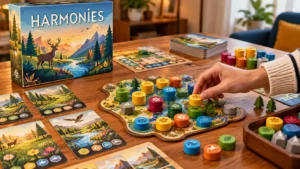
Harmonies is a nature-themed strategy game that challenges players to develop miniature landscapes using colourful wooden pieces.
Participants create forests, mountains, waterways and other environments while arranging habitats that attract different animal species.
Each animal card introduces positioning requirements that influence how the landscape should develop.
The result is a layered spatial puzzle where visual design and strategic efficiency work together.
Harmonies – Game Details
| Feature | Details |
| Game type | Nature-themed abstract strategy |
| Players | 1–4 |
| Recommended age | 10+ |
| Playing time | 30–45 minutes |
| Difficulty | Easy to medium |
| Publisher | Libellud |
| Original release | 2024 |
| Main objective | Create valuable landscapes and complete animal habitat patterns |
| Gameplay mechanics | Spatial planning, token placement and pattern recognition |
| Best for | Puzzle enthusiasts, solo players and families |
| Replayability | High through changing animal cards and layouts |
| Main limitation | Relatively little direct confrontation |
Why does Harmonies deserve attention?
Harmonies adds vertical landscape construction to the familiar tile-placement formula.
Players must think about both the position and height of landscape features, creating different strategic possibilities from conventional flat tile games.
Its attractive components also make the finished boards satisfying to examine.
Compared with Cascadia, Harmonies places greater emphasis on constructing three-dimensional arrangements. Cascadia focuses more heavily on connecting habitats and positioning wildlife tokens.
Both games are excellent, but Harmonies may be especially appealing to players who enjoy compact spatial puzzles with layered scoring objectives.
12. Scotland Yard – Best Detective and Mystery Board Game
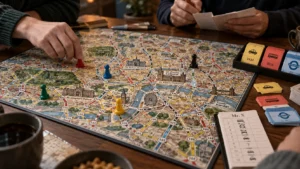
Scotland Yard is a classic deduction game in which detectives attempt to capture a mysterious fugitive known as Mr X.
The action takes place across a London transport network containing taxi, bus and Underground connections.
One player controls Mr X, whose movements remain hidden except during designated reveals. The remaining players coordinate their efforts to identify and intercept the fugitive.
Scotland Yard – Game Details
| Feature | Details |
| Game type | Detective mystery and hidden movement |
| Players | 2–6 |
| Recommended age | 8+ |
| Playing time | Approximately 45 minutes |
| Difficulty | Easy to medium |
| Publisher | Ravensburger |
| Original release | 1983 |
| Main objective | Detectives must capture Mr X; Mr X must evade capture |
| Gameplay mechanics | Hidden movement, deduction and route planning |
| Best for | Families, mystery enthusiasts and teamwork |
| Replayability | High through changing movements and player decisions |
| Main limitation | Mr X and detective roles provide different experiences |
What makes Scotland Yard unique?
The game creates an interesting balance between hidden information and open cooperation.
Detectives must interpret transport tickets and previous location reveals to predict where Mr X may travel.
Meanwhile, the fugitive must plan escape routes without becoming trapped.
Both sides rely on strategic thinking, but they approach the same board from completely different perspectives.
For a detailed explanation of transport tickets, hidden movement and winning strategies, explore the Scotland Yard board game rules and gameplay.
13. The Quacks of Quedlinburg – Best Push-Your-Luck Board Game
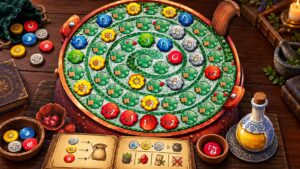
The Quacks of Quedlinburg is a potion-making game where players compete to create valuable mixtures without causing their cauldrons to explode.
Each participant draws ingredient tokens from a personal bag and adds them to their potion.
Drawing additional ingredients can improve rewards, but collecting too many dangerous white tokens causes the mixture to fail.
Players must decide whether to stop safely or continue taking risks.
The Quacks of Quedlinburg – Game Details
| Feature | Details |
| Game type | Push-your-luck and bag-building strategy |
| Players | 2–4 |
| Recommended age | 10+ |
| Playing time | Approximately 45 minutes |
| Difficulty | Easy to medium |
| Original publisher | Schmidt Spiele |
| Original release | 2018 |
| Main objective | Earn the most victory points through potion brewing |
| Gameplay mechanics | Bag building, probability and risk management |
| Best for | Families and players who enjoy unpredictable outcomes |
| Replayability | High through different ingredient effects |
| Main limitation | Random token draws can influence results considerably |
Why is this game entertaining?
The Quacks of Quedlinburg creates excitement through the decision to continue drawing ingredients despite growing risk.
Stopping early protects existing progress, but a successful additional draw could significantly improve the reward.
Between rounds, players purchase better ingredients, gradually changing the contents of their bags.
This allows strategic decisions to influence future probability, even though individual draws remain uncertain.
It is particularly enjoyable for groups that appreciate suspense, surprises and relatively simple rules.
14. Brass: Birmingham – Best Advanced Strategy Board Game
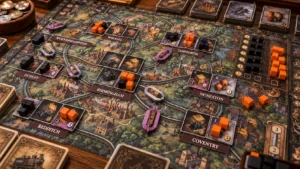
Brass: Birmingham is a complex economic strategy game set during Britain’s Industrial Revolution.
Players develop industries, construct transport networks and manage resources across the Midlands.
Businesses such as cotton mills, breweries, iron works and coal mines form interconnected economic systems.
The game unfolds across the Canal and Rail eras, requiring players to plan investments carefully and adapt to changing opportunities.
Brass: Birmingham – Game Details
| Feature | Details |
| Game type | Heavy economic strategy |
| Players | 2–4 |
| Recommended age | 14+ |
| Playing time | 60–120 minutes |
| Difficulty | Advanced |
| Publisher | Roxley |
| Original release | 2018 |
| Main objective | Earn the most victory points through successful industrial development |
| Gameplay mechanics | Economic planning, network building and resource management |
| Best for | Experienced strategy gamers |
| Replayability | Very high through economic interaction and alternative strategies |
| Main limitation | Steep learning curve and demanding decision-making |
Why is Brass: Birmingham highly regarded?
Brass: Birmingham rewards long-term planning while forcing players to respond to a shared economy.
Resources and transport connections can benefit several participants, creating an unusual relationship between cooperation and competition.
A railway connection built by one player may create opportunities for another, while a poorly timed industrial investment can become expensive.
The game consistently performs strongly in the BoardGameGeek community rankings, reflecting its reputation among enthusiasts.
However, its complexity makes it less appropriate for casual groups wanting a short, spontaneous gaming session.
For experienced players who enjoy challenging business simulations and economic systems, Brass: Birmingham offers substantial strategic depth.
15. Articulate! – Best Board Game for Large Family Gatherings
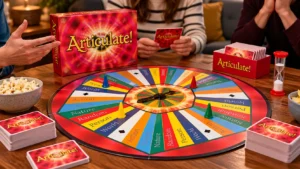
Articulate! is a fast-paced description game that challenges teams to identify as many words as possible before time runs out.
One player describes a word or phrase while teammates attempt to guess the correct answer.
The describer cannot simply say the target word, making creative explanations and quick thinking essential.
Different categories encourage players to describe people, places, objects, activities and other familiar concepts.
Articulate! – Game Details
| Feature | Details |
| Game type | Party, word-description and team game |
| Players | 4–20+ |
| Recommended age | 12+ |
| Playing time | Approximately 30–60 minutes, depending on the group |
| Difficulty | Easy |
| Publisher | Drumond Park |
| Main objective | Describe and correctly guess words to advance towards victory |
| Gameplay mechanics | Timed descriptions, teamwork and vocabulary |
| Best for | Parties, family gatherings and large groups |
| Replayability | High through different topics and team combinations |
| Main limitation | Shy participants or players with language barriers may find it challenging |
Why is Articulate! excellent for groups?
Articulate! works particularly well when participants have different levels of gaming experience.
The rules are easy to grasp, and much of the entertainment comes from unexpected descriptions, hurried guesses and communication mistakes.
Because the game is played in teams, large groups can participate without needing additional boards or complicated accessories.
Anyone organising a party can learn the full setup, scoring system and gameplay through the Articulate rules and instructions.
For families who enjoy vocabulary-based challenges, Bananagrams offers another fast-paced word game, focusing on constructing words from letter tiles instead of verbal descriptions.
How Do You Choose the Best Board Game?
Finding the right board game depends on the people playing, the time available and the type of entertainment everyone enjoys.
- Consider the number of players. Some games are designed specifically for two people, while others accommodate larger groups. Sky Team and 7 Wonders Duel work exclusively with two players, whereas Articulate! is better suited to team-based gatherings.
- Check the playing time. Short games such as Codenames are ideal for quick entertainment. Longer titles such as Brass: Birmingham require a greater commitment and benefit from players who enjoy extended strategic sessions.
- Match the complexity to the group. Beginners will generally find Ticket to Ride: Europe, Azul and Cascadia easier to approach than games involving extensive economic planning or complicated resource systems.
- Think about competitive versus cooperative play. Pandemic and Sky Team reward teamwork, whereas Catan and 7 Wonders Duel encourage direct competition.
- Consider replayability. Games with variable layouts, changing objectives or multiple strategies often provide better long-term value for households that play regularly.
- Compare editions before buying. Player counts, components, expansion compatibility and sometimes recommended ages can differ between versions. Check the exact retail box rather than relying on details for a similarly named edition.
For anyone who enjoys classic tabletop strategy, learning techniques such as how to win Chess in four moves can also provide an introduction to tactical planning and anticipating an opponent’s decisions.
Which Board Games Are Best for Different Types of Players?
The strongest choice is not necessarily the most complicated or highest-ranked game. It depends on the experience players want.
For families with younger participants, Ticket to Ride: Europe, Azul and Scotland Yard provide a balance of straightforward objectives and meaningful decisions.
Couples seeking competitive strategy should consider 7 Wonders Duel, while those preferring cooperation may enjoy Sky Team.
Larger groups will generally get more value from social games such as Codenames and Articulate!, where communication creates much of the entertainment.
Solo players have strong options in Cascadia, Wingspan, Harmonies and Heat: Pedal to the Metal.
Experienced strategy gamers looking for substantial depth should consider Brass: Birmingham, particularly if they enjoy detailed economic decisions and long-term planning.
FAQs About the Best Board Games
What is the best board game overall?
Ticket to Ride: Europe is one of the strongest all-round recommendations because it combines accessible rules, engaging strategy and support for two to five players. However, the best game depends on your preferred playing style.
What are the best board games for adults?
Brass: Birmingham, Wingspan, Catan, 7 Wonders Duel and Heat: Pedal to the Metal are excellent options for adults who enjoy strategic decision-making and competitive gameplay.
Which board games are best for two players?
7 Wonders Duel and Sky Team are particularly good because both are designed specifically for two participants. Azul, Cascadia and Wingspan also work with two players.
What are the best family board games for beginners?
Ticket to Ride: Europe, Azul, Cascadia and Scotland Yard offer approachable rules and enough depth to remain entertaining after repeated sessions.
Which board games are best for large groups?
Articulate! and Codenames are particularly suitable for larger gatherings. Their team-based mechanics allow several people to participate without needing complex individual turns.
What is the best cooperative board game?
Pandemic is an excellent introduction to cooperative strategy for small groups. Sky Team is another strong choice, specifically designed around cooperation between two players.
Which board games have the highest replayability?
Wingspan, Brass: Birmingham, Catan and Cascadia offer considerable replay value through changing situations, strategic decisions and different combinations of objectives or components.
Are modern board games better than traditional board games?
Modern board games often provide a wider range of mechanisms, themes and player experiences. However, traditional games such as Chess, Scrabble and Backgammon remain excellent choices for players who prefer established rules and strategic challenges.